
Dyslexia is one of the most common learning differences — and one of the most misunderstood. It affects approximately 15 to 20% of the population, cutting across every level of intelligence and socioeconomic background. Yet many children with dyslexia reach adolescence, or even adulthood, without ever receiving a formal diagnosis — not because their difficulties aren’t real, but because the condition is frequently mistaken for lack of effort, poor attitude, or insufficient instruction.
If you’ve been watching your child struggle with reading and wondering whether there’s a specific reason behind it — here’s what dyslexia actually is, what it looks like in Ontario classrooms, why it gets missed in bright children, and what a formal assessment makes possible.
What Dyslexia Actually Is — and What It Isn’t
The most persistent myth about dyslexia is that it causes children to see letters backwards. It doesn’t. Dyslexia is a language-based learning disability rooted in phonological processing — the brain’s ability to connect letters to the sounds they represent, and to manipulate those sounds in working memory.
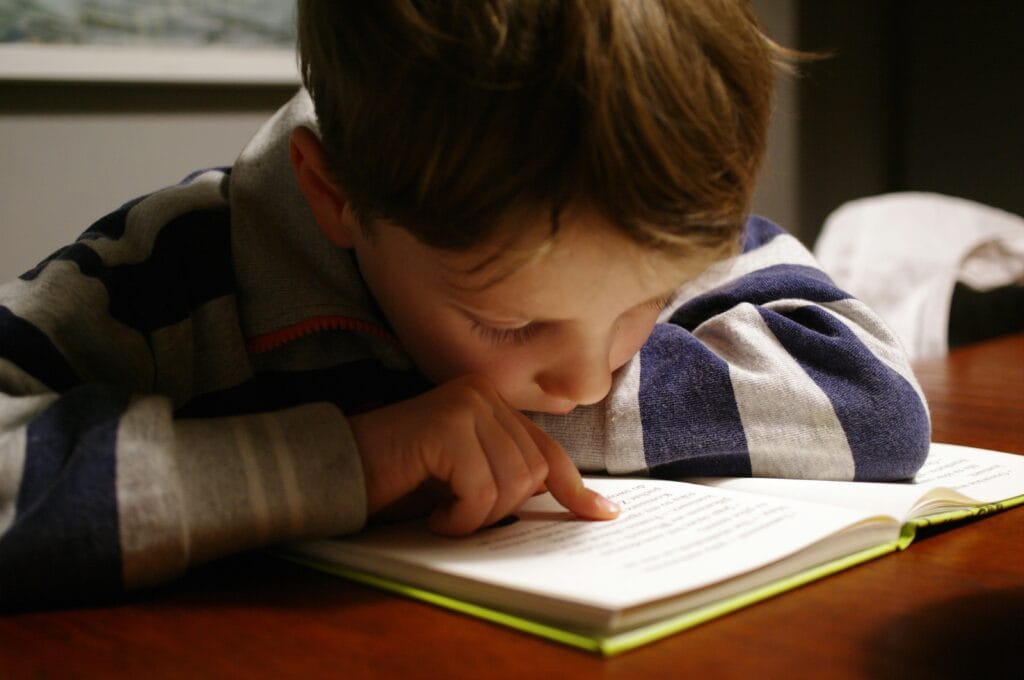
A child with dyslexia has difficulty decoding written words — breaking them into their component sounds — regardless of how intelligent they are, how motivated they are, or how much instruction they’ve received. Their struggles are not a reflection of effort or ability. They are the result of a specific, neurologically based processing difference that requires a specific type of instruction to address.
And that instruction works — when it’s targeted correctly. The research on dyslexia intervention is among the strongest in all of learning science. Structured literacy programs grounded in explicit phonics instruction consistently produce significant gains for dyslexic readers. The barrier is identification: you cannot implement the right intervention until you know the diagnosis.
Signs That Are Worth Taking Seriously
Dyslexia typically becomes apparent when formal reading instruction begins — usually in Grade 1 or 2. In Ontario classrooms, the signs most worth paying attention to include:
- Difficulty learning letter sounds and connecting them to written letters, despite repeated instruction
- Reading that remains slow, laboured, and inaccurate well beyond the expected developmental timeline
- Guessing words from context or picture clues rather than decoding them letter by letter
- Persistent spelling difficulties that do not improve with practice — even for words the child has studied repeatedly
- Strong listening comprehension, but significantly weaker reading comprehension — understanding when read to, but struggling when reading independently
- Avoidance of reading tasks, emotional reactions when asked to read aloud, or complaints that reading is exhausting
In older children and adolescents who have developed compensatory strategies, the signs can be more subtle: reading speed that remains slow compared to peers, avoidance of reading for pleasure, consistent difficulty on timed tests, or disproportionate fatigue after reading-intensive tasks.
Why Bright Children Get Missed
Intelligent children with dyslexia are particularly vulnerable to late or missed identification. Their cognitive strengths — strong verbal reasoning, excellent memory for context, sophisticated comprehension when content is read to them — allow them to compensate for the decoding deficit in ways that can fool even experienced teachers.
These children use context clues, memorize high-frequency words by sight, and leverage their intelligence to fill in gaps that their phonological processing isn’t providing. For years, they can appear to be “getting by” — working enormously hard to do so — while the gap between their reading ability and their intellectual potential quietly widens.
“I thought I just wasn’t a reader. I had no idea there was a specific reason why reading was so much harder for me than for everyone else. Finding out at 14 that I had dyslexia felt like someone finally turning on a light.” — A common experience among students assessed at McDowall Health
Many of these children internalize the message that they are less capable than their peers — not understanding that their difficulty has a name, a clear explanation, and a research-supported treatment path. That narrative, if it persists, is harder to undo than the reading deficit itself.
Why “More Reading Practice” Isn’t the Answer
One of the most common experiences parents describe before a dyslexia diagnosis is years of additional reading support — tutoring, intervention programs, extra practice at home — that produced limited progress. This is almost always because the instruction wasn’t targeting the right thing.
General reading programs teach reading. Structured literacy programs teach phonological processing — the specific deficit underlying dyslexia. Orton-Gillingham based approaches, for example, are designed explicitly for dyslexic learners and use a systematic, multisensory method that targets the phonological gap directly. Without knowing that phonological processing is the issue, a tutor or teacher will use general instruction — which has already proven not to be working.
What a Formal Dyslexia Assessment Involves
A dyslexia assessment in Ontario is conducted as part of a comprehensive psychoeducational assessment. Your registered psychologist administers measures specifically targeting:
- Phonological processing — the core deficit in dyslexia
- Single word reading accuracy and decoding of nonsense words (which tests phonics knowledge directly, without the possibility of whole-word memorization)
- Reading fluency — how quickly and accurately the child reads
- Spelling accuracy and patterns
- Reading comprehension
- Cognitive ability — to document the discrepancy between intellectual potential and reading performance
This combination of measures is what allows the psychologist to confirm that the reading difficulties are genuine, significant, specific to language processing, and inconsistent with the child’s overall intellectual capacity — the clinical profile that defines dyslexia.
What a Diagnosis Opens in Ontario
Once dyslexia is formally documented in a psychoeducational assessment report, your child is entitled to specific accommodations within Ontario schools. These typically include:
- Extended time on tests and assignments
- Use of text-to-speech and assistive reading technology
- Access to oral reading of tests and instructions
- Reduced spelling penalties in written work
- A formal IEP documenting learning needs and required accommodations
More importantly, the diagnosis identifies the specific type of instruction that will actually work: structured literacy programs delivered explicitly and systematically by a trained educator or specialist. Schools are not always equipped to provide this — in which case, the report also supports families in advocating for specialized tutoring as part of the child’s support plan.
For more on whether a psychoeducational assessment is the right first step for your child: 5 Signs Your Child May Need a Psychoeducational Assessment
For a full picture of costs and insurance options: What Does a Psychoeducational Assessment Cost in Ontario?
Ready to find out? McDowall Integrative Psychology & Healthcare provides psychoeducational assessments that include comprehensive dyslexia testing for children and adults in Toronto, Mississauga, and Brampton — and virtually across Ontario. Reports are prepared by registered psychologists and accepted by Ontario school boards. Call (416) 485-5555 or book online to get started.
Related reading:
- 5 Signs Your Child May Need a Psychoeducational Assessment
- Is Your Child Struggling in School? What a Psychoeducational Assessment Can Tell You
- What Does a Psychoeducational Assessment Cost in Ontario?
- IQ Test vs. Psychoeducational Assessment — Which Does Your Child Need?
Frequently Asked Questions
Is dyslexia tested separately from a psychoeducational assessment?
No — dyslexia is identified within a psychoeducational assessment, not through a separate standalone test. The assessment includes specific measures of phonological processing, word reading accuracy, decoding, reading fluency, and spelling, alongside a broader cognitive battery. This combination is what allows the psychologist to confirm that reading difficulties are phonologically based, significant, and inconsistent with cognitive ability — the clinical profile that constitutes a dyslexia diagnosis.
What school accommodations does a dyslexia diagnosis qualify for in Ontario?
A formal dyslexia diagnosis documented in a psychoeducational assessment report entitles students to an Individual Education Plan (IEP) and specific accommodations including extended time, text-to-speech technology, oral reading of tests, and reduced spelling penalties in written work. The specific accommodations are negotiated with the school based on the assessment recommendations and the child’s individual profile.
Can adults be diagnosed with dyslexia?
Yes. Adults who struggled with reading and spelling throughout school — or who have developed strong compensatory strategies but still find reading slow, effortful, or exhausting — can and do receive dyslexia diagnoses through psychoeducational assessment. Adult diagnoses support workplace accommodation requests, post-secondary institution accommodations, and access to assistive technology. Many adults are formally assessed for the first time in their twenties, thirties, or beyond.
What if my child’s school says they don’t qualify for an IEP?
A formal psychoeducational assessment report from a registered psychologist is one of the strongest tools available for challenging that determination. Ontario school boards are legally required to consider psychological assessment evidence when making identification and accommodation decisions. If a school declines to act on a private assessment report, families have the right to request a formal IPRC (Identification, Placement, and Review Committee) meeting and to appeal decisions they disagree with.